
What an AI Automation Audit Actually Looks Like for a Small Business
A lot of business owners hear the phrase “AI automation audit” and assume it means a large technical project, expensive software, or something designed for bigger companies.
In reality, it is usually much more practical than that.
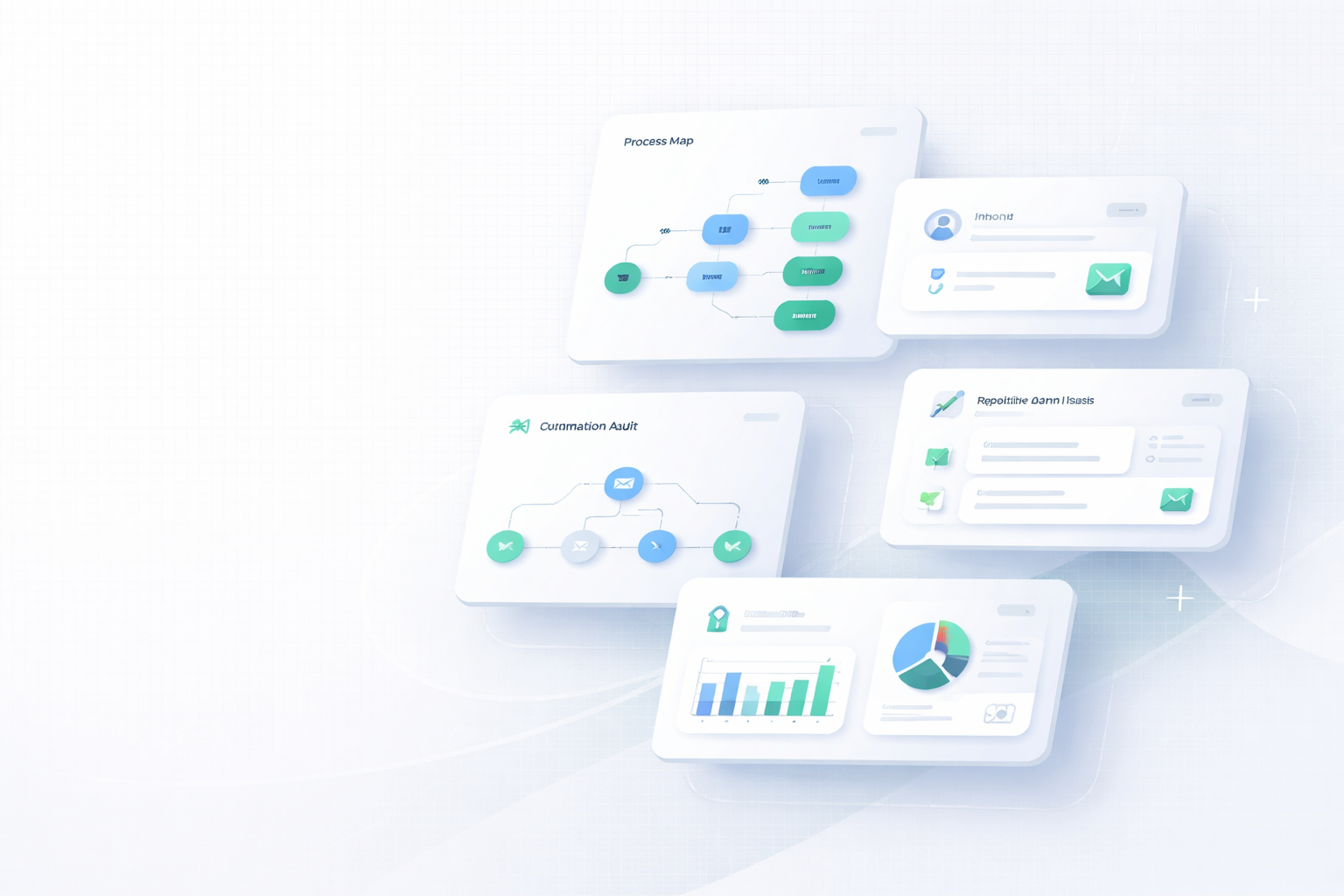
A good AI automation audit is simply a structured review of how a business currently operates. It looks at how enquiries come in, how information is handled, where time is being lost, and which repetitive tasks could be improved with better systems.
For many UK SMEs, this is becoming more important because growth often creates operational pressure before it creates operational clarity. The business gets busier, but the process behind the scenes still depends on manual work, memory, inbox checking, copying information between tools, and trying to keep up.
That creates delays. It creates inconsistency. And over time, it can start affecting both customer experience and sales performance.
This is why an audit matters. It helps you step back and properly assess what is happening day to day, instead of just reacting to the next task.
If you want support with this kind of work, you can explore our AI Integration service or book a consultation.
It starts by looking at how work really happens
One of the biggest differences between a business that feels organised and one that feels constantly rushed is not effort. It is process.
Most small businesses are not short on effort. They are usually working very hard. The issue is that a lot of the work depends on disconnected steps that have built up over time.
An enquiry may come through the website, then someone sees it later in email, replies manually, makes a note elsewhere, forgets to follow up, and then has to search for the details again a few days later. Or a lead arrives through social media, gets answered in one place, but never gets added into the wider sales process.
When you review this properly, the problem often becomes clear very quickly. The business may already have enough demand, enough skill, and enough activity. What it lacks is a smoother system around that activity.
An audit begins by mapping the journey properly.
Where do leads come from?
Who receives them first?
How fast are they answered?
What happens next?
What happens if the right person is unavailable?
Where is the customer information stored?
Is follow-up consistent or dependent on memory?
These questions sound simple, but they usually reveal where the friction is.
Then it becomes easier to spot repetitive work
Once the flow is visible, repetitive patterns begin to stand out.
This is usually where business owners realise how much time is being spent on tasks that do not need to be manual every time.
For example, the same kinds of admin actions often appear again and again: confirming enquiries, sending first replies, moving information into another system, booking follow-ups, chasing missed messages, sending reminders, categorising requests, or answering the same early-stage questions.
None of these tasks are necessarily difficult. The problem is volume and repetition.
When these jobs build up, they reduce the time available for higher-value work. The team becomes more reactive. Response times slow down. Things start to rely too heavily on individuals remembering what to do.
This is where automation becomes valuable.
A good audit does not try to automate everything. It focuses on identifying the parts of the process that are repetitive, rules-based, and slowing the business down. That is where practical improvements usually come from.
Lead handling is often one of the biggest gaps
For many SMEs, the clearest opportunity is lead handling.
Businesses invest time and money into getting attention. They improve their website, work on SEO, run adverts, post on social media, or rely on referrals. But if the lead response process is slow or inconsistent, the value of that marketing drops immediately.
A delayed response is not always caused by poor service. Often, it is just caused by operational overload.
Someone is busy. Someone plans to reply later. Someone forgets. The message sits in the wrong inbox. The follow-up never happens. The lead cools off.
An AI automation audit reviews this properly.
It looks at whether leads are acknowledged quickly, whether the right information is captured early, whether the enquiry is routed correctly, and whether a clear next step happens automatically where appropriate.
That could mean an instant confirmation email, structured lead capture, automatic internal notifications, follow-up prompts, or better qualification before a human steps in.
The point is not to remove the human part of the business. The point is to protect it by making sure routine steps happen reliably.
If your lead journey needs improvement alongside visibility, our SEO service can also help strengthen how people find and enter your sales process in the first place.
The audit also looks at how information is stored
Another common issue is data quality.
A lot of small businesses have useful information, but it is spread across too many places. Some details are in inboxes. Some are in spreadsheets. Some are in WhatsApp conversations. Some are written in notes. Some are only remembered by one person.
That makes the business harder to scale.
It also makes it harder to measure what is working. You may be getting leads, but not know which source is driving the best ones. You may be following up, but not consistently enough to see the full value. You may be busy, but unable to clearly see which activity creates the best return.
A proper audit looks at how data is captured, where it is moved, where it is lost, and how systems could be made more connected.
This part matters because automation only works well when the inputs are clear. If information is inconsistent from the start, the process around it becomes weaker too.
The best recommendations are usually phased
Some businesses delay this kind of review because they think the result will be a long, disruptive transformation project.
Usually, the best outcomes are much more focused.
A good audit should help prioritise the most valuable improvements first. That might be better website enquiry handling. It might be automated follow-ups. It might be connecting forms to a CRM. It might be improving booking flows. It might be introducing an AI assistant for first-line questions.
Not every useful improvement needs to happen at once.
In fact, smaller phased changes are often the most effective because they create visible wins without overwhelming the team. They also make it easier to assess what is working before moving further.
This is one reason audits are so useful. They replace guesswork with order. Instead of asking “should we use AI?” in a vague way, the business starts asking better questions:
Where are we losing time?
Where are we losing leads?
Which steps repeat most often?
Which improvements would have the clearest return?
That is a much stronger position to work from.
The real goal is not just saving time
Saving time is important, but it is not the full picture.
The real value of an AI automation audit is that it helps a business become more consistent, more responsive, and easier to operate.
When repetitive work is reduced, people can focus on the parts of the business where human judgement matters most. That may be sales conversations, customer relationships, service quality, strategy, or delivery.
Customers feel the difference as well. Faster acknowledgement, smoother follow-up, and clearer next steps create a more professional experience. That can improve trust before a sale even happens.
So while automation is often discussed as a technology topic, in practice it is usually a business improvement topic first.
The technology matters, but only because it supports a better process.
Final thoughts
If your business feels busier than it should, if admin is taking too much time, or if leads are not moving through the business as smoothly as they could, an AI automation audit is often the right place to start.
It helps reveal where the pressure points are, which tasks are creating drag, and where better systems could make the biggest difference.
For many SMEs, the issue is not lack of effort. It is that the systems behind the business have not kept pace with the way the business now operates.
That can be improved.
If you want to identify practical automation opportunities in your business, explore our AI Integration service, contact us, or book a consultation to discuss your current setup.
Comments
No comments yet. Be the first to leave one.
Related posts
View all →
What Visitors Notice in the First 5 Seconds on a Website
Visitors form opinions quickly. This guide explains what people usually notice first on a business website, why those early signals affect trust, and what UK SMEs should improve first.

How an Outdated Website Can Quietly Damage Trust in Your Business
An outdated website does more than look old. It can reduce trust, weaken conversions, and make a good business feel less credible. Here is why that happens and what UK SMEs should review first.

Why a Slow Website Can Cost You Enquiries Before SEO Even Matters
A slow website does more than hurt rankings. It affects trust, user experience, and conversion from the first visit. Here is why website speed matters commercially for UK SMEs.